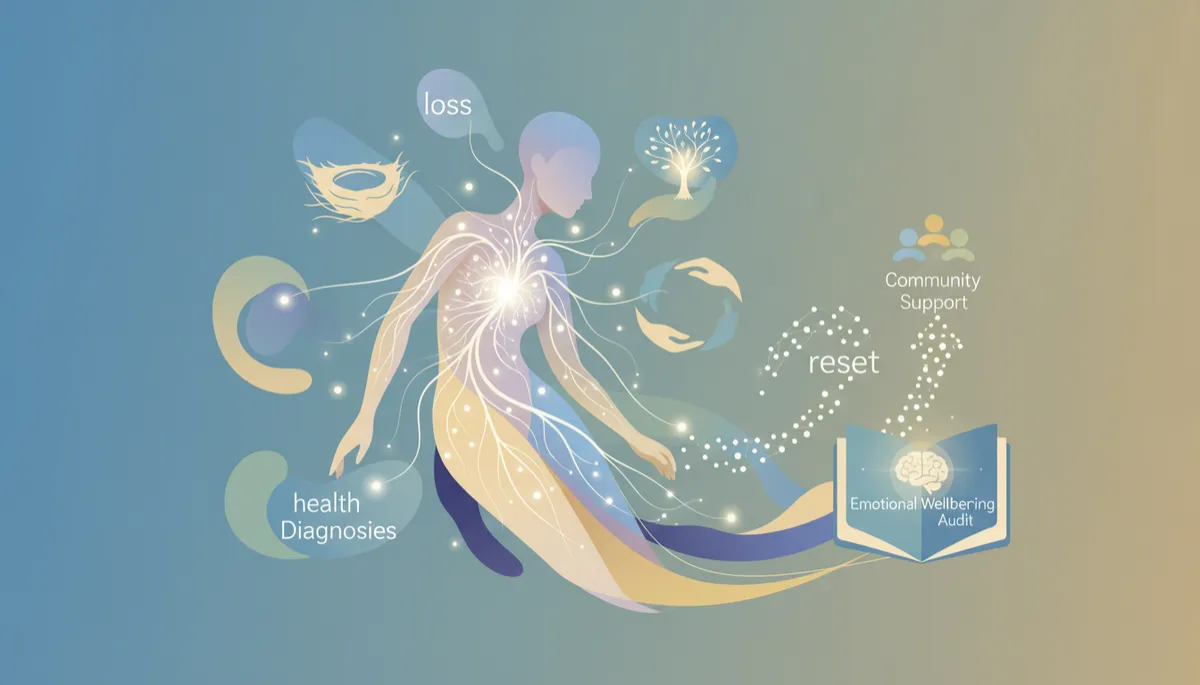
Managing Emotional Toll of Life Transitions
Emotional Wellbeing, Life Transitions, Nervous System Health
Managing the Emotional Toll of Life Transitions: A Gentle Guide for Your Nervous System
Major life transitions, such as bereavement, receiving a long-term health diagnosis, or stepping into demanding caregiving roles, place the human nervous system into prolonged survival mode, causing emotional shock to manifest as physical exhaustion, muscle guarding, and systemic inflammation. Finding your footing requires acknowledging that emotional strain is an embodied physical event, gently regulating the autonomic nervous system through grounding micro-habits, and anchoring yourself in consistent, empathetic community support. Sustainable recovery is not about forcing rapid resilience, but steadily restoring biological safety from the inside out.
At Nature’s Pure Love, we call this work the journey of Stress & Emotional Reset, learning to honour what you have been through while gently supporting your body, mind, and emotions back toward steadiness and safety.
When Life Changes, Your Nervous System Feels It
Life transitions are not just “in your head”. Your nervous system (the network of nerves, brain, and spinal cord that manages stress, rest, and survival) is constantly tracking how safe or unsafe your world feels. When something big happens, such as:
The loss of a loved one, relationship, or role
A new or long-term health diagnosis — for you or someone close to you
Becoming a caregiver, parent, or support person almost overnight
…your nervous system can move into a prolonged state of high alert. This might look like:
Difficulty relaxing, even when you are exhausted
Racing thoughts, worry, or feeling “on edge” much of the time
Feeling emotionally numb, disconnected, or “shut down”
None of this means you are failing or “not coping well enough”. It means your nervous system is doing its best to protect you in the only way it knows. The invitation is to learn how to regulate, to offer your body and emotions consistent signals of safety and support.
Marcia’s Story: When Emotional Tension Becomes Physical
The physical reality of emotional shock is clearly demonstrated in the experience of Marcia, a member of the Nature’s Pure Love community.
At the end of January, Marcia suffered the sudden, devastating loss of her 22-year-old daughter midway through university. The shock plunged her nervous system into profound bereavement, accompanied by severe emotional fatigue, racing thoughts, and systemic tension that made day-to-day functioning feel almost impossible.
Marcia described waking up each morning with a tight chest and clenched jaw. Her shoulders felt as if they were permanently raised towards her ears. She had frequent headaches, digestive discomfort, and a deep, bone-level fatigue that sleep never seemed to touch. She worried something serious was being missed, despite regular check-ups with her GP and specialist team.
Instead of receiving clinical detachment or generic platitudes to "stay strong," Marcia was supported through an NPL personalised wellness plan guided by a dedicated therapeutic mentor
During our conversations, it became clear that Marcia had been holding her breath, not just physically, but emotionally. She had pushed down her grief to stay strong for everyone else. She minimised her own health worries so she would not “burden” her family. Every unspoken fear and unshed tear translated into chronic muscular tension, shallow breathing, and a nervous system that rarely felt safe enough to fully rest.

Physical tension often reflects emotional load your nervous system has been quietly carrying.
Marcia’s experience is not unusual. Our bodies often speak before we have words. Tight muscles, restless sleep, racing heart, gut discomfort, or a sense of heaviness can all be signs that your nervous system is asking for a reset.
Gentle reminder: If you have new, severe, or worrying symptoms, always seek medical advice first. Complementary support, like the services at Nature’s Pure Love, is designed to sit alongside professional medical care, not replace it.
Understanding the Impact of Major Life Changes on Your Nervous System
Loss and Grief: When Safety Feels Shattered
Bereavement, the end of a relationship, retirement, or children leaving home can all trigger a deep sense of uncertainty. Your nervous system may respond with:
Hyper-alertness: scanning for further loss or danger
Sleep disruption: difficulty falling or staying asleep, vivid dreams
Emotional swings: moving quickly between tears, anger, and numbness
These are understandable responses to a world that suddenly feels unfamiliar. Gentle regulation practices can help your body remember that, even in grief, small moments of safety and comfort are still possible.
Health Diagnoses: Living with Uncertainty and Ongoing Stress
A new diagnosis, whether it is yours or a loved one’s, often brings appointments, decisions, and a wave of “what if” questions. Your nervous system may respond by staying in a near-constant fight, flight, or freeze state, even when you are doing something ordinary like making dinner or answering an email. You might notice:
Tightness in your chest, throat, or stomach when you think about the future
Feeling detached from your own body or surroundings, as if watching from a distance
Difficulty concentrating, making decisions, or remembering small details
While medical teams focus on treatment and clinical care, complementary approaches, such as those offered by Nature’s Pure Love can support your emotional landscape and help your nervous system find small, steadying anchors in daily life.
Caregiving: The Hidden Load on Body and Mind
Caregivers often carry an invisible backpack of responsibilities: medication schedules, appointments, finances, household tasks, and the emotional weight of watching someone you love struggle. Over time, this can lead to:
Chronic muscle tension in the neck, shoulders, and lower back
Frequent colds or feeling “run down” as the body struggles to recover
Emotional exhaustion, irritability, or a sense of losing yourself
Your nervous system needs regular, compassionate care, especially when you are caring for others.
The “Stress & Emotional Reset” Approach at Nature’s Pure Love
At Nature’s Pure Love, we see stress & emotional reset as a gentle, guided process of helping your nervous system move from constant survival mode towards greater steadiness, comfort, and resilience. It is not about erasing your experiences or pretending everything is fine. Instead, it is about:
Understanding how life transitions have affected your body, emotions, and energy
Introducing small, realistic practices that signal “you are safe enough to soften”
Building supportive routines, relationships, and environments that nourish you over time
Our work is grounded in the C.R.E.A.M framework, a structured yet compassionate approach that blends education, lifestyle guidance, emotional resilience, and self-care habits. Every step is designed to respect your medical care, honour your lived experience, and give you tools you can continue to use long after a programme or session ends.
Gentle, Actionable Strategies to Support Nervous System Regulation
1. Start with Awareness: Noticing Without Judgement
Before you can reset, you need to notice. For a few days, gently observe how your body responds in different situations. You might ask:
When does my breathing become shallow or tight?
Are there times of day when I feel particularly tense, heavy, or wired?
What situations leave me feeling more settled or more unsettled?
You are not trying to change anything yet, but simply listening and offering your nervous system the respect of being heard.
2. Micro-Pauses: 60 Seconds to Soften the Edges of Stress
Many people feel they do not have time for self-care. Micro-pauses are a realistic alternative, brief, intentional moments that tell your body, “You can soften, just a little.” Try:
Placing one hand on your chest and one on your abdomen, noticing the warmth and weight of your hands for 5–10 breaths
Gently lengthening your exhale, in for a count of 3, out for a count of 5, while sitting or standing comfortably (stop if this feels uncomfortable or dizzy)
Softly rolling your shoulders, unclenching your jaw, and relaxing your tongue from the roof of your mouth
Pro Tip: Link micro-pauses to everyday actions, boiling the kettle, waiting for a webpage to load, or sitting in the car before going inside. Small, frequent signals of safety can be more effective than occasional big efforts.
3. Grounding Through the Senses: Returning to the Present Moment
When your mind jumps to the past or future, your nervous system often follows. Grounding helps you return to what is actually happening right now. You might try:
Naming five things you can see, four you can feel, three you can hear, two you can smell, and one you can taste
Standing or sitting with your feet flat on the floor, noticing the support beneath you and the weight of your body being held
Holding a comforting object, a warm mug, a soft scarf, a smooth stone, and paying attention to its texture and temperature
4. Creating Simple, Soothing Rhythms in Your Day
Your nervous system loves rhythm and predictability. In times of change, even small routines can offer a sense of safety. Consider:
A short morning check-in: “How am I feeling today, and what one thing would support me?”
A gentle movement practice, a brief walk, light stretching, or simple joint rotations, adjusted to your energy and medical guidance
An evening wind-down: dimmer lights, a warm drink, a few notes in a journal, or quiet reflection to signal to your body that the day is softening
5. Making Space for Emotion
Suppressed emotions often show up as physical tension, much like Marcia’s headaches and clenched jaw. Making space for emotion does not mean forcing yourself to relive everything at once. Instead, you might:
Set aside a few minutes to sit with how you feel, perhaps placing a hand on your heart and simply naming it: “sad”, “angry”, “tired”, “overwhelmed”, “grateful”, “relieved”
Write a letter you never send — to a person, to your body, or even to the version of you who is trying so hard to hold everything together
Allow gentle tears, sighs, or laughter when they arise, without apologising for them
⚠️ Important: If you feel overwhelmed by emotion, or notice thoughts of self-harm or hopelessness, please reach out to your GP, NHS services, or a qualified mental health professional. You do not have to manage this alone.
Building Community Support: You Are Not Meant to Do This Alone
One of the most powerful regulators of the nervous system is safe connection. Being heard, seen, and supported can help your body shift out of isolation and into a sense of shared humanity. Community support does not have to be large or loud. It can be quiet, steady, and deeply personal. You might consider:
Sharing honestly with one trusted friend or family member about how you are really feeling, not just how you think you “should” be coping
Joining a small group or community space — in person or online — where others are navigating similar transitions, such as grief groups, caregiver circles, or wellbeing communities like those hosted by Nature’s Pure Love
Exploring gentle, guided support through coaching, mentoring, or structured programmes that respect your pace and boundaries
For many adults in the UK — especially professionals, small business owners, and caregivers — asking for help can feel uncomfortable. Yet your nervous system is wired for connection. Allowing yourself to receive support is not a weakness; it is a form of wise, sustainable self-care.
Take the Next Gentle Step: Try the Emotional Wellbeing Audit
If you recognise parts of yourself in Marcia’s story — the tight jaw, the constant responsibility, the quiet grief or worry — it may be time to pause and take stock. The Emotional Wellbeing Audit from Nature’s Pure Love is a simple, reflective tool designed to help you:
Understand where stress and emotional tension are showing up in your life and body
Identify areas where small changes could bring more ease and steadiness
Clarify what kind of support — personal, professional, or community-based — would feel most nurturing right now
You can access the Emotional Wellbeing Audit here: Emotional Wellbeing Audit. Set aside a quiet moment, make yourself a warm drink, and complete it at your own pace. There are no right or wrong answers — only honest reflections that can help you take your next step with more clarity and compassion.
How Nature’s Pure Love Can Walk Beside You
Nature’s Pure Love exists to support individuals like you — adults balancing work, family, health, and the realities of ageing or caregiving — with complementary health and wellness services that are ethical, compassionate, and grounded in real life. We do not promise cures or quick fixes. Instead, we offer:
Personalised wellness programmes guided by our C.R.E.A.M framework, tailored to your circumstances and medical guidance
Discovery and wellbeing consultations where you can explore your concerns in a calm, unhurried space
Lifestyle and self-care education that empowers you to make informed, sustainable choices without fear or pressure
Coaching, mentoring, and group support that help you feel less alone in what you are navigating
Your Invitation: Book a Free Discovery Call
If you are feeling overwhelmed, fatigued, or out of balance — and unsure where to start — you are warmly invited to book a FREE Discovery Call with Nature’s Pure Love. This is a safe, no-pressure conversation where you can:
Share a little about what you are going through and how it is affecting your nervous system, emotions, and daily life
Ask questions about complementary support, Stress & Emotional Reset, and our programmes or membership options
Explore whether working together feels like the right next step — with complete freedom to say yes, no, or “not yet”
You do not have to carry the emotional toll of life transitions alone. With gentle nervous system support, compassionate community, and clear, ethical guidance, it is possible to move from constant strain towards a more grounded, spacious way of living — even when circumstances are still challenging.
When you are ready, begin with the Emotional Wellbeing Audit, and consider booking your FREE Discovery Call with Nature’s Pure Love. One small, kind step can be the start of a very different relationship with stress, emotion, and your own nervous system.